
June 28, 2024 by Paul Swindell from Sudden Cardiac Arrest UK
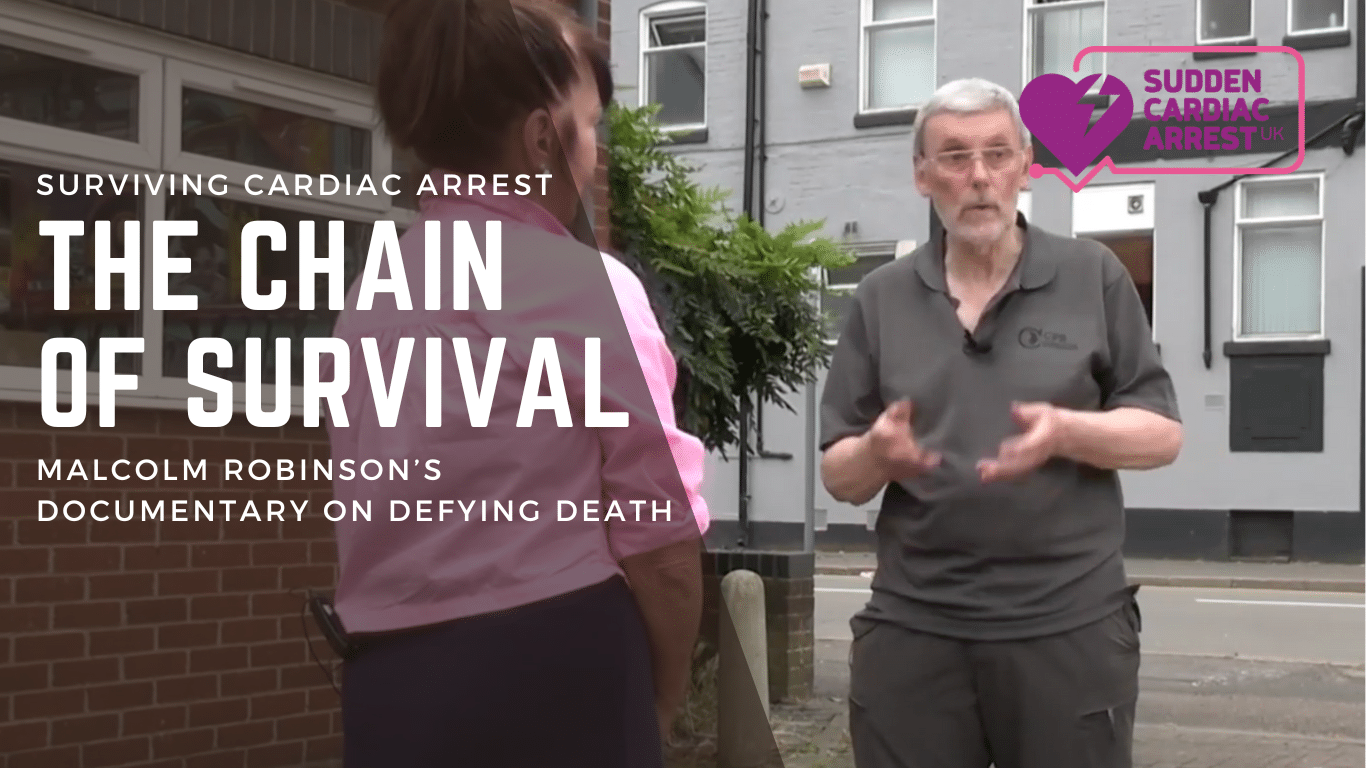
In the compelling documentary “Surviving Cardiac Arrest – The Chain of Survival,” Malcolm Robinson offers a first-hand account of his astonishing survival following an out-of-hospital cardiac arrest. With candid emotion and stark honesty, Malcolm guides us through the pivotal moments that created an indomitable chain of survival—events that saved his life and sparked a movement dedicated to saving others.
The film opens with Malcolm retracing his steps to the fateful day in Birmingham’s Digbeth area when the unthinkable occurred. As he lay motionless on the ground, his heart abruptly stopped beating, surrounded by a crowd of bystanders frozen in shock and precious seconds ticked away, diminishing his chances of survival with every passing moment. It was a chilling reminder of how quickly life can hang in the balance and how crucial it is to have a community prepared to act.
Capturing the Everyday Heroes
Through his lens, viewers are introduced to the everyday heroes who defied the odds and formed the first crucial links in the chain of survival. Judy Lewis, a nurse, emerges as an unlikely guardian angel, defying the bystander effect that had paralyzed those around her. Without hesitation, Judy sprang into action, initiating immediate cardiopulmonary resuscitation (CPR). For nearly 20 minutes, her rhythmic compressions kept Malcolm’s blood circulating, buying him precious time until the paramedics arrived.
Robinson’s documentary provides a gripping behind-the-scenes look at the intricate procedures and cutting-edge equipment involved in pre-hospital care as a well-choreographed team of paramedics, led by Cameron McVittie, initiated advanced life-support measures, including defibrillation and airway management. Each second was a battle against the relentless march of time, a race to save a life hanging by a thread.
Who’s who at the scene
Get the low down on the people who are often at the scene of an out-of-hospital cardiac arrest.
The Interdisciplinary Collaboration
One of the most compelling aspects of Malcolm’s film is the seamless collaboration between various healthcare professionals captured on screen. From paramedics and nurses to cardiologists and intensive care specialists, each discipline played a vital role in the symphony of survival, working in tandem to provide the best possible care and maximize the chances of a positive outcome.
Robinson’s camera follows his journey through the emergency angioplasty and stenting procedure performed by Professor Derek Connolly, an interventional cardiologist, to open a blocked artery and restore blood flow to his heart. The film then shifts to the intensive care battle, where Dr. John Hume and his team employ cutting-edge technology and meticulous monitoring to support Malcolm’s brain recovery and give his body the best chance at healing.
Who’s who at the hospital
A Life-Saving Movement Ignited

Through engaging storytelling and powerful imagery, Malcolm captures the emotional journey of himself and his family. Their profound gratitude towards the individuals who saved his life is a poignant reminder of these life-saving actions’ far-reaching impact on families and communities.
Robinson’s harrowing experience became a catalyst for change, igniting a fire within him – a burning desire to ensure that no one else would face the terrifying prospect of having their life hanging in the balance due to a lack of bystander action. Driven by gratitude for the everyday heroes who saved him, he founded CPR Counts, a basic life support training organization dedicated to empowering communities with lifesaving skills.
A Call to Action
Through “Surviving Cardiac Arrest – The Chain of Survival,” he issues a powerful call to action, reminding viewers that each of us has the potential to be a lifesaver and that by embracing lifesaving skills, we can create a world where no one faces the terrifying prospect of losing a loved one due to a lack of preparedness.
Malcolm Robinson’s documentary is more than just a retelling of his ordeal; it is a testament to the resilience of the human spirit, the power of teamwork, and the unwavering dedication of healthcare professionals who defy the odds daily. Through his lens, viewers are reminded of the profound impact that a single act of heroism can have and the ripple effect it can create in communities worldwide.
Important Viewing Information
Warning: The following video contains scenes that some viewers may find distressing, including discussions and visual representations of medical emergencies, cardiac arrest, and life-saving procedures such as CPR. Viewer discretion is advised.
Despite the intense nature of the content, this video is highly informative. It offers valuable insights into the critical importance of CPR and the comprehensive journey of surviving a cardiac arrest. It features real-life accounts, expert commentary, and detailed explanations of emergency response protocols, making it an essential watch for anyone interested in life-saving techniques and cardiac health.

Paul Swindell
After our first meet-up in February 2015, I realised I was not alone. It was the first time since my cardiac arrest the previous year that I had spoken face-to-face with someone who had experienced what I had. This was also true for my wife, who also happened to be my lifesaver. From that meet-up, the idea of SCA UK was born. Since then, we have achieved a considerable amount, primarily providing information, resources and support to others in a similar situation but also raising the profile of survivorship and the need for better post-discharge care. We are starting to get traction in this, and with the formation of the charity, I genuinely believe we have a bright future ahead and will make a significant difference in the lives of many who join our ranks.
 CPR Counts